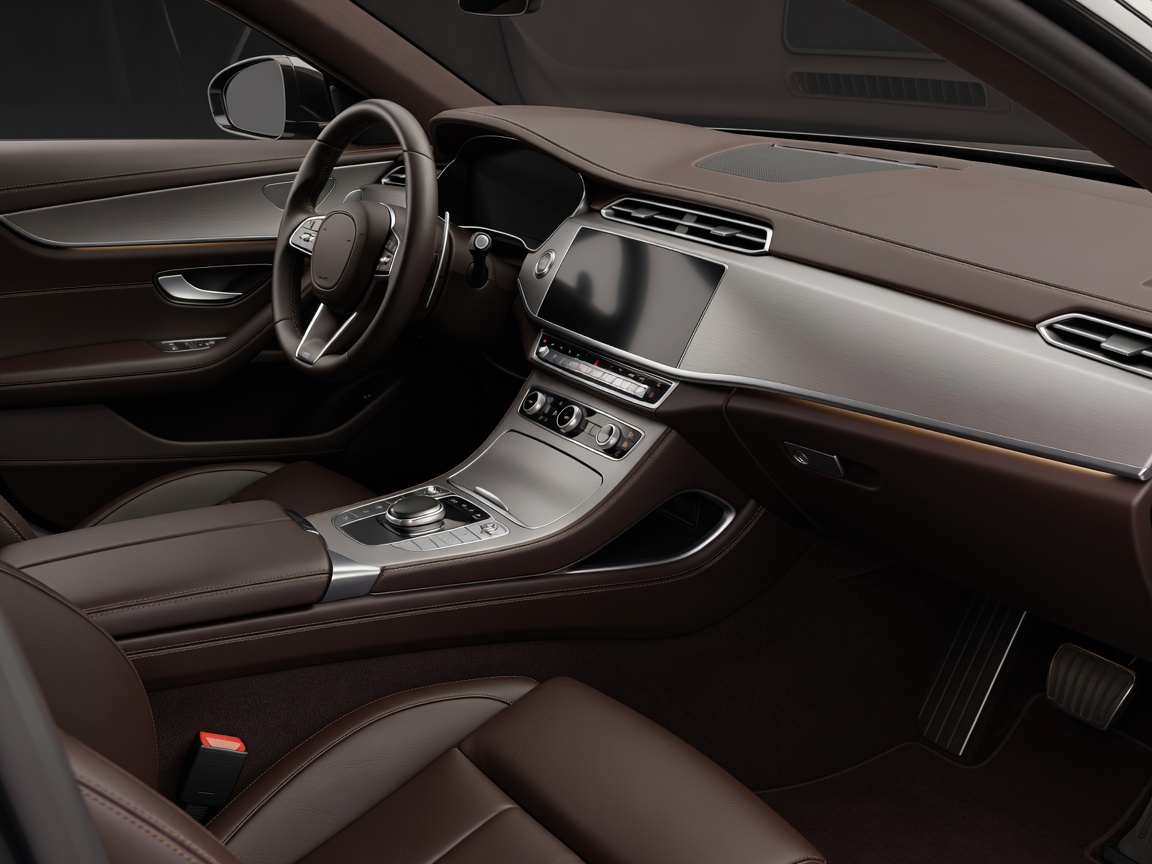
A cabin is a working environment. It must support posture, visibility, climate, conversation, storage and safe control while still creating a particular mood. The most convincing luxury comes from how those needs are resolved together.
Begin with fit and ergonomics
Try the seat for more than a moment. Check thigh support, lumbar adjustment, head restraint position and whether the seat remains comfortable when the vehicle is set up for your driving posture. A long list of electric adjustments does not guarantee a good fit. Controls should be reachable without twisting, and the steering wheel should adjust enough to let you sit comfortably while seeing the instruments.
Ergonomics is the study of how people interact with objects and spaces. In a car, it includes switch placement, display legibility, sightlines and the effort required to make common adjustments. Climate and audio controls are particularly useful to test because they are used often. A touch display can look clean, but essential tasks should not demand repeated searching through menus.

Materials beyond the first impression
Natural leather, coated leather alternatives, textiles, wood veneers and metal finishes all have different characteristics. No category is automatically best or most sustainable in every application. Ask what a surface feels like, how it may wear, whether it gets hot in direct sun, how it responds to cleaning and whether replacement or repair is practical. Material names alone rarely tell the whole story.
Leather can feel supple and develop signs of use; its finish and care requirements vary. Synthetic upholstery can offer a different texture and cleaning profile, but composition and durability vary too. Textiles may provide grip and a less glossy surface, though spills and abrasion need consideration. Wood veneers can add visual warmth; inspect the consistency of grain and the way edges are finished. Metal trim may feel cool and precise, while polished surfaces can reflect light.
Craftsmanship is not simply the presence of expensive-looking materials. Look for even seams, clean transitions, secure trim and surfaces that are pleasant where hands actually rest. Check for glare on bright trim and whether controls remain easy to identify at night. A quiet, well-assembled cabin often feels more carefully resolved than one that relies on conspicuous decoration.

Acoustics, climate and light
Cabin acoustics describe how sound travels and is perceived inside the vehicle. Tyres, wind, powertrain and road surfaces all contribute. Quietness can make conversation easier and reduce fatigue, but no cabin is silent in every condition. Pay attention to steady noise on the types of roads you actually travel and to whether unwanted rattles or resonances are apparent.
Climate control should be simple to understand and distribute air comfortably. Rear passengers need adequate ventilation and space, especially on longer trips. Ambient lighting can help orient occupants after dark, but should not distract or create reflections. Adjust brightness and colour if possible; the system should support the cabin rather than dominate it.
Practicality lives in the details
Check storage with the objects you commonly carry. Phone spaces, cup holders, door bins and the centre console should be useful rather than merely present. Consider how easily the rear seats are accessed, whether adults have suitable head and leg room, and whether child seats can be installed if relevant. Luggage capacity figures may not explain the shape of the load area, access height or the usefulness of the opening. Inspect the actual vehicle and measure if fit is critical.
Durability and care are part of the ownership experience. Ask for manufacturer-approved cleaning guidance and warranty terms. Avoid assuming a particular trim will stay pristine without maintenance. High-gloss surfaces can show fingerprints; pale upholstery can make marks more visible; textured materials may be difficult to clean. These are not reasons to reject a finish, but useful factors to weigh against your routine.
Material comparison
| Material | Typical benefits | Possible drawbacks | Care considerations |
|---|---|---|---|
| Natural leather | Tactile range; can develop character with use | Finish, heat response and wear vary | Follow finish-specific cleaning advice |
| Synthetic upholstery | Wide range of textures; often straightforward to wipe | Composition and long-term feel differ by product | Use approved products; avoid harsh solvents |
| Textile | Can offer grip and a softer, less reflective surface | May absorb spills or show abrasion | Check spot-cleaning and stain guidance |
| Wood veneer | Natural grain and visual warmth | Gloss and grain variation may not suit every cabin | Protect from harsh chemicals and abrasion |
| Metal finish | Precise appearance and a cool tactile quality | Polished surfaces can reflect or show marks | Use soft cloths and suitable cleaners |
Cabin inspection checklist
- Set the seat and steering position; check support and sightlines.
- Operate common controls while parked and assess clarity.
- Touch high-use surfaces and inspect seams, edges and trim joins.
- Look for reflections and glare in daylight and after dark.
- Check rear-seat access, passenger comfort and storage.
- Inspect luggage access and the actual shape of the load area.
- Ask about material care, warranty and repair options.
Good to know
Cabin materials and equipment often vary between trims and markets. Inspect the exact configuration you plan to use; a press vehicle may not represent the version available to you.
Premium craftsmanship is useful when it improves touch, comfort, clarity and durability. A thoughtful cabin need not be ornate. Its best qualities are often the things you notice after hours behind the wheel: a seat that supports you, a control that makes sense and a surface that still feels considered after everyday use.